Is Qdoba Healthy? An Honest Nutritionist's Review (2026)
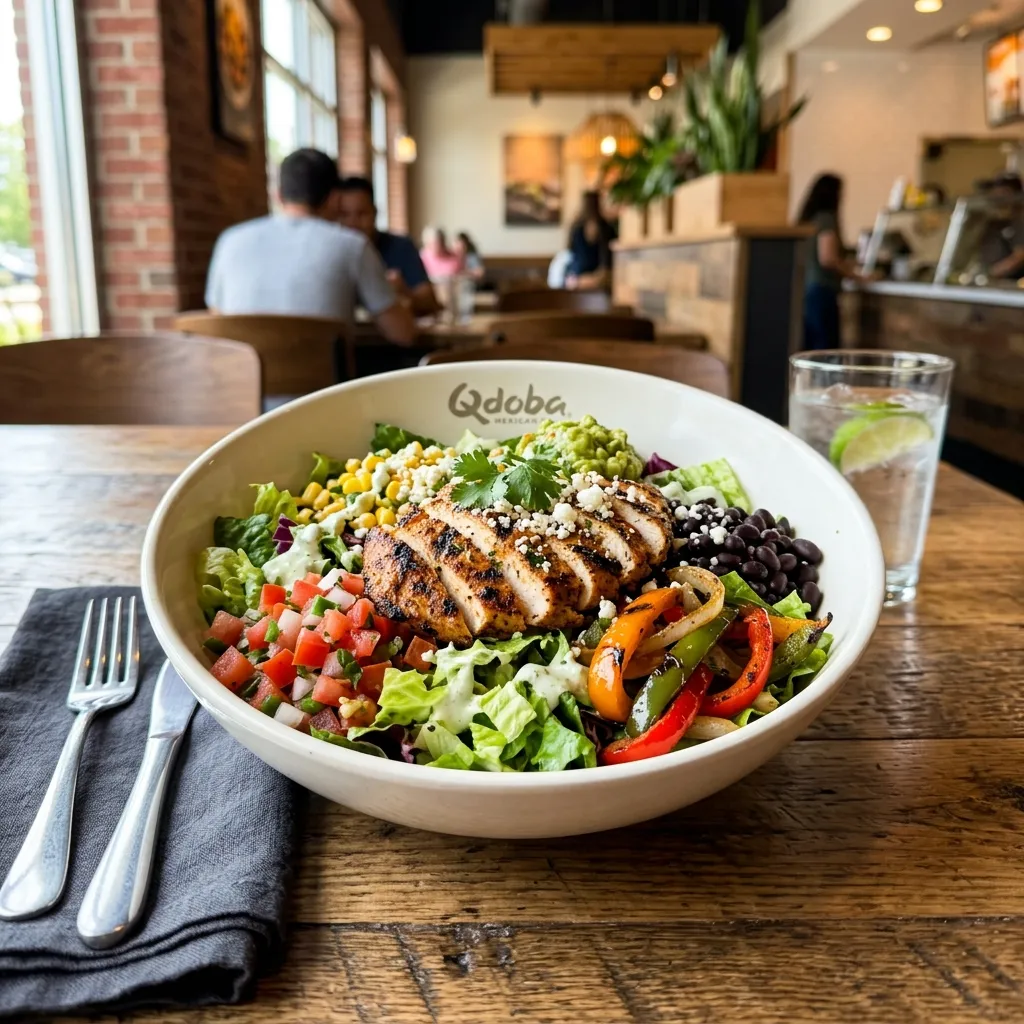
It’s a common dilemma: you want a quick, filling meal, but you don't want to destroy your dietary progress. Many fast-casual chains claim to be healthy, but their menus are secretly loaded with massive sodium counts and hidden fats. Is Qdoba actually good for you, or is it just another calorie bomb in disguise? As a nutritionist, I audited Qdoba's entire ingredient list to give you an honest review of what to order and what to skip.
The Nutritional Breakdown: Bowls vs. Burritos
To understand if Qdoba is healthy, we need to compare how your choice of "vessel" impacts the nutrition profile of your meal. The biggest differentiator is the flour tortilla. A standard Qdoba flour burrito tortilla alone contains **320 calories, 9g of fat, and 50g of carbohydrates** before you even add a single grain of rice or piece of chicken.
This is why, from a health perspective, choosing a Qdoba Bowl or a Salad Base is almost always the superior choice. By choosing a bowl, you automatically save over 300 calories, which you can instead allocate to nutrient-dense toppings like guacamole or fajita veggies.
Comparison of Three Common Qdoba Builds
Here is how three different custom orders stack up in terms of calories, protein, carbs, and fat:
| Meal Type & Ingredients | Calories | Protein | Carbs | Fat |
|---|---|---|---|---|
| Healthy Lean Bowl (Lettuce base, Grilled Adobo Chicken, Black Beans, Fajita Veggies, Pico de Gallo, Salsa Verde) |
390 kcal | 33g | 29g | 12g |
| Healthy Vegan Bowl (Brown Rice, Pinto Beans, Fajita Veggies, Guacamole, Pico de Gallo, Fiery Habanero Salsa) |
560 kcal | 12g | 72g | 26g |
| The Calorie Bomb Burrito (Flour Tortilla, White Rice, Carnitas, Black Beans, 3-Cheese Queso, Sour Cream, Guacamole, Cheese) |
1,120 kcal | 46g | 128g | 51g |
What Makes Qdoba "Healthy"?
There are several major pros that make Qdoba a fantastic option for health-conscious diners:
- High-Quality Lean Proteins: Options like Grilled Adobo Chicken (170 calories, 25g protein) and Grilled Steak (160 calories, 19g protein) are low in fat and packed with clean protein to support muscle growth and recovery. (Learn more in our dedicated Grilled Adobo Chicken Nutrition Guide).
- Fiber-Rich Options: Black beans and pinto beans are outstanding sources of plant-based protein and dietary fiber, which aids digestion and promotes feelings of fullness.
- Free Healthy Extras: Unlike their primary competitor, Chipotle, Qdoba does not charge extra for guacamole. Guacamole is loaded with heart-healthy monounsaturated fats.
- Fresh Veggies: The fajita bell peppers and onions are grilled fresh and add volume, micronutrients, and crunch for minimal calories.
The "Diet Pitfalls" at Qdoba: What to Avoid
If you're not careful, it is incredibly easy to turn a healthy meal into a high-calorie disaster. Here are the main traps to avoid:
- Queso & Creamy Sauces: Qdoba's signature 3-Cheese Queso adds 150 calories and 11g of fat per serving. Creamy sauces like the Garlic Berbere or Chile Crema also add significant fat calories without much volume. (Check our complete Sauces & Dressings Nutrition Guide for details).
- White Rice & Refined Carbs: Cilantro Lime White Rice is refined and digested quickly. Opt for brown rice, which provides complex carbs and fiber, or skip rice entirely for a lettuce base.
- Tortilla Chips: A regular side of Qdoba tortilla chips adds **560 calories and 27g of fat**. If you are in a calorie deficit, this side item alone can easily push you over your daily target.
Is Qdoba Healthier Than Chipotle?
This is a classic fast-casual debate. Nutritionally, both restaurants offer very similar raw ingredients. Chipotle prides itself on organic and locally sourced ingredients, which some health advocates prefer. However, from a practical standpoint, **Qdoba wins on value and customizability** because they don't charge extra for guacamole or queso. Just remember that "free" doesn't mean "calorie-free"! If you want to compare their exact macro profiles, check out our Qdoba vs. Chipotle Macro Comparison.
How to Order a Truly Healthy Meal at Qdoba
When you get to the front of the line, follow this simple blueprint for a nutrient-dense, calorie-conscious meal:
1. Select Your Base: Choose Romaine Lettuce or a mix of lettuce and Brown Rice.
2. Load up on Protein: Select Grilled Adobo Chicken or Grilled Steak. Avoid double protein unless you are actively bulking.
3. Choose One Bean: Go with Black Beans or Pinto Beans for fiber.
4. Pile on the Veggies: Ask for double Fajita Veggies.
5. Use Salsa as Dressing: Choose Pico de Gallo and Salsa Verde instead of heavy vinaigrettes or sour cream.
6. Limit the Fats: Add a single scoop of Guacamole (for healthy fats), but skip the shredded cheese, sour cream, and queso.
Conclusion
Ultimately, Qdoba is as healthy as you make it. By understanding the calorie density of different ingredients and utilizing our interactive Qdoba Calorie Calculator, you can customize a meal that aligns perfectly with your wellness and fitness objectives. Don't let hidden calories catch you off guard—plan your bowl before you go, stick to whole foods, and enjoy a delicious, nutrient-packed meal!